
Melissa Etheridge: Survivorship After Breast Cancer
- Melissa Etheridge, who beat breast cancer 20 years old, is releasing her new studio album, RISE, on March 27, 2026, her first collection of entirely new songs since 2019. And the first new album in five years.
- The album, produced with Shooter Jennings, features empowering tracks, like her new single “Matches”, inspired by seeing Johnny Cash perform as a child, and a heartfelt song titled “Call You,” dedicated to her late son, Beckett Cypher.
- Etheridge was diagnosed with breast cancer in 2004 after finding a lump in her breast. She received treatment that included surgery, chemotherapy, and radiation therapy. She reached remission after nearly one year of treatment.
- As part of her treatment, the singer of “Come To My Window” had a lumpectomy, a breast-conserving procedure that removes cancerous or abnormal tissue. Unlike a mastectomy, this surgery removes only the tumor and a small portion of the surrounding tissue.
The award-winning country music star’s new album, presented on Sun Records, is her first full-length collection of entirely new songs since the release of The Medicine Show in 2019.
Read MoreView this post on Instagram
The RISE CD track list consist of the following 10 songs: “Bein’ Alive, Matches, Rise, Don’t You Want A Woman, Other Side Of Blue, If You Ever Leave Me
Davina, To Be A Woman, Tomboy, Call You, and More Love.”
It’s available for pre-order at the regular price of $12.98 USD, and the Rise LP can be pre-ordered for $26.98 USD.
RELATED: ‘Flourish’ A Story of Rediscovering One’s Inner Strength
Etheridge’s new single “Matches” has also now been released, and a lyric video has been uploaded on YouTube for fans.
According to American Songwriter, the song “Matches” is Etheridge’s favorite on the album. In the lyrics she recaps how seeing Johnny Cash perform at the U.S. Penitentiary in Leavenworth, Kansas, in 1970, had a profound influence on her music career.
She reportedly recounted, “I was 8, and a huge Johnny Cash fan. His music really lit my fingers and made me so excited.
“When I say, ‘Mama, let me play with the matches,’ I really wanted to play that music.”
The song’s pre-chorus is as follows: “I said, “Mama, let me play with the matches/ Oh, he’s like a preacher with the flames in his eyes/ Mama, let me play with the matches/ He lights up every inch of the sky.”
Followed by the chorus, where she sings: “Oh, the spirit / Oh, thе fire /Blessed arе the ears that can hear it/ Calling me to my desire/ My desire.”
The album also features a song dedicated to her late son, Beckett Cypher, who passed away at the age of 21 from causes related to his opioid addiction. The song is titled “Call You.”
View this post on Instagram
Jennings, who helped produced RISE, praised Etheridge, according to American Songwriter, sayinbg, “She’s one of the greatest rock and roll artists of our lifetime and an incredible songwriter as well.
“Watching her work, wearing her songs, basking in her abilities, was a high mark in my career as musician.”
He reportedly continued, “The only thing I can say is I am lucky to have had the chance to work with Melissa and her incredible band on this album.
“Being around her is to be second party to the kind of experience, excellence and musicianship that made the rock and roll heroes of our generation. And Melissa Etheridge is certainly one of those. I had a blast making this album and I can’t wait for the world to hear it.”
Next year, Etheridge will take The RISE Tour on the road, kicking off in Detroit, Michigan, in March.
The tour will visit major cities such as Pickering, Waterloo, Burlington, Hampton Beach, Portland, Englewood, St. Louis, and Austin.
View this post on Instagram
Melissa Etheridge’s Breast Cancer Journey
Etheridge’s life has not always been easy, and it’s certainly been a source of inspiration for some of her music. Part of her life’s journey includes a bout with breast cancer.
In 2004, she was on tour when she discovered a lump in her left breast. A biopsy confirmed her breast cancer diagnosis. Although her exact type of breast cancer isn’t publicly known, it was stage 2 upon discovery.
“It was a rather large tumor, but had only contaminated one lymph node,” she told ABC News.
Etheridge had a lumpectomy to remove a 4-centimeter tumor from her breast. This procedure involves removing just the cancer and an area of healthy tissue around it. Her surgery also included the removal of 14 lymph nodes after discovering the cancer had spread.
WATCH: Should I Have a Lumpectomy or Mastectomy?
She then received chemotherapy which involves giving the singer drugs designed to kill cancer cells. Chemo is usually administered either orally or intravenously. The “Angels Would Fall” singer also received radiation therapy. This kind of cancer treatment uses high-energy beams such as X-rays aimed at cancer cells designed to kill them.
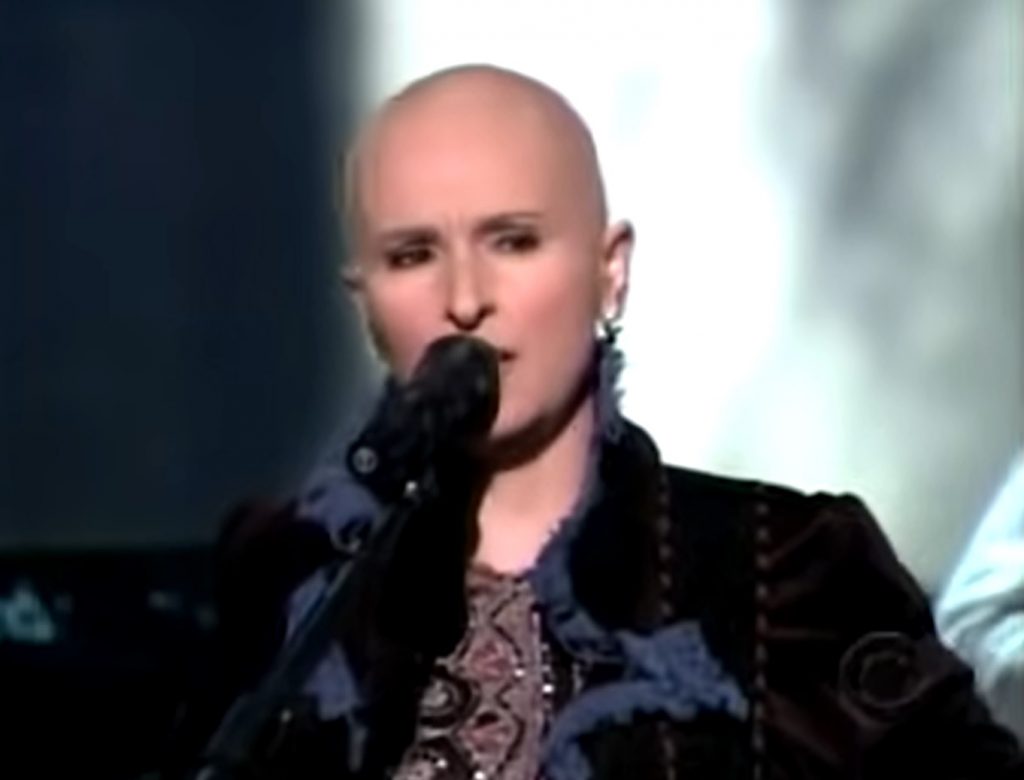
In 2005, the singer and cancer survivor courageously took the stage at the Grammy Awards, still without hair from chemotherapy. She later shared that on the morning of the show, she had just completed radiation treatment and was feeling physically weak.
“I remember halfway through, thinking in my mind, ‘Oh my God,” Etheridge said of her memorable yet inspiring performance.
Thankfully, her course of treatment proved to be successful and she’s still able to perform across the country with her most famous hits.
View this post on Instagram
Breast Cancer Screenings
As for breast cancer screenings, a mammogram is the primary test doctors use to check for breast cancer. The wide consensus is that women should have annual mammograms between the ages of 45 and 54.
And while leading organizations like the American Cancer Society say women should have the option to begin annual screenings between 40 and 45, there is some disagreement among doctors as to whether this is beneficial.
For example, after saying for years that women shouldn’t begin mammograms until 50, an independent panel of experts called the U.S. Preventive Services Task Force recently changed their guidelines to say that women of average risk should begin at 40.
Expert Breast Cancer Resources
- 6 Common Excuses for Skipping a Mammogram That You Need to Stop Using!
- Mammograms Are Still the Best Tool for Detecting Breast Cancer — A Warning About Thermography
- I Have Dense Breasts. Do I Need a 3D Mammogram?
- When You’re Getting a Mammogram, Ask About Dense Breasts
- Black Women May Need To Start Breast Cancer Screening At 42, According To A New Study
- Doctors Say New FDA-Approved Breast Cancer Screening Tool Using AI Won’t Replace Traditional Mammograms But Will Enhance Them
- The Mammogram Debate: Should Women Start Breast Cancer Screening at 30?
Dr. Connie Lehman, a diagnostic radiologist who specializes in breast cancer at Massachusetts General Hospital in Boston, says when you begin mammograms is a decision you should discuss with your doctor, as they can help you understand your specific circumstances and weigh the benefits and potential risks of earlier screening.
Follow That Fire: Life After Cancer Will be Different, That Doesn’t Have to be a Bad Thing
Your mammogram results may lead your doctor to recommend further testing with a diagnostic mammogram, ultrasound, or magnetic resonance imaging (MRI). If these tests suggest changes that might be cancer, you’ll need a biopsy a test in which your doctor removes a small sample of tissue and has it checked for cancer in a lab.
Only a biopsy can confirm or rule out whether you have breast cancer.
Although it can be frightening to go through breast cancer testing, SurvivorNet’s doctors say not to fret. It’s possible for a biopsy to find that a lump is benign or not cancerous.
If you do receive a breast cancer diagnosis, you’ll learn what type of breast cancer you have and the stage of the disease. The stage means how far in your body the cancer has spread.
Though most breast cancers are not linked to inherited genetic mutations, knowing whether you have a mutation could affect the type of treatment you get. SurvivorNet experts recommend all women who are diagnosed with breast cancer be given genetic testing.
Based on your test results, preferences, and personal circumstances (such as your age), you and your doctor will make decisions about how to proceed with treatment, which we have plenty of expert resources on.
What You Need to Know About Survivorship
Whether you’re beginning your journey into survivorship or are a seasoned survivor, you’ll quickly learn that it’s a term with many layers. At its simplest, ‘survivorship’ signifies the state of living beyond a challenging event or diagnosis, such as cancer. More specifically, it marks the period after treatment where a patient goes from merely surviving to thriving, as they navigate their newfound lease on life.
It’s important to remember that survivorship isn’t just an end state – it’s a continuous journey. It begins the moment a person is diagnosed with a significant health condition and continues throughout their life. You might hear people say things like, “from the moment of diagnosis, you become a survivor.”
It’s a powerful sentiment that reflects the courage and resilience involved in battling a serious illness.
Being a survivor also means redefining your life while coping with the aftermath of disease and its treatment. This phase might include the challenge of dealing with physical and emotional changes, attending regular check-ups, the fear of recurrence, or the need for long-term medication. Despite these hurdles, many survivors find unique strength, growth, and transformation during this time.
Survivorship is much more than just the absence of disease—it’s a new stage of life, a rite of passage. Your journey might not have been one you would have chosen, but through it, you’ll uncover a greater understanding of yourself and what you’re capable of. Each person’s survivorship journey is unique, and how you choose to travel is entirely up to you.
Remember—navigating this new terrain called ‘Survivorship’. It might be challenging, but remember, you’re not alone. There are ample resources and support systems designed to help you along the way.
Continued Medical Care
Don’t lose sight of the importance of continued medical care – always keep your follow-up appointments and adhere to any healthcare recommendations.
Remember, embracing these coping strategies can help you navigate your way into survivorship with greater ease and renewed energy. Just remember – slow and steady wins the race! You’ve overcome huge hurdles, it’s okay to take this new stage of your life at your own pace.
Resilient learning to overcome any obstacle
Additionally, health checkups are an integral part of maintaining wellness and spotting potential health issues early. This holds true for everyone, but even more so for a person who’s in the throes of survivorship.
One of the main reasons you’ll want to maintain routine health checks is to monitor for recurrence. While the hope is always for complete recovery, there’s a possibility of the disease returning—even with successful treatment. Regular checkups allow you to keep a vigilant eye on the situation, leading to early detection and treatment if any problem emerges.
Managing Other Health Conditions & Healthy Lifestyle Changes, Matters Too!
A survivorship journey can occasionally lead to new health conditions, including heart problems, diabetes, or osteoporosis. Routine screenings and monitoring help keep these conditions under control, ensuring they don’t escalate into major health risks.
Regular checkups also serve as an opportunity for your health care provider to give advice on healthy lifestyle changes. This includes exercise, a balanced diet, stress management, and quitting habits like smoking and excessive alcohol consumption—factors that can significantly lower the risk of recurrence or other health issues.
‘Adversity and the Art of Happiness,’ How Hardship Makes You Stronger
Contributing: SurvivorNet Staff
Learn more about SurvivorNet's rigorous medical review process.
